
Core Applications and Benefits for HEWER MultiLOTO Lockout Stations
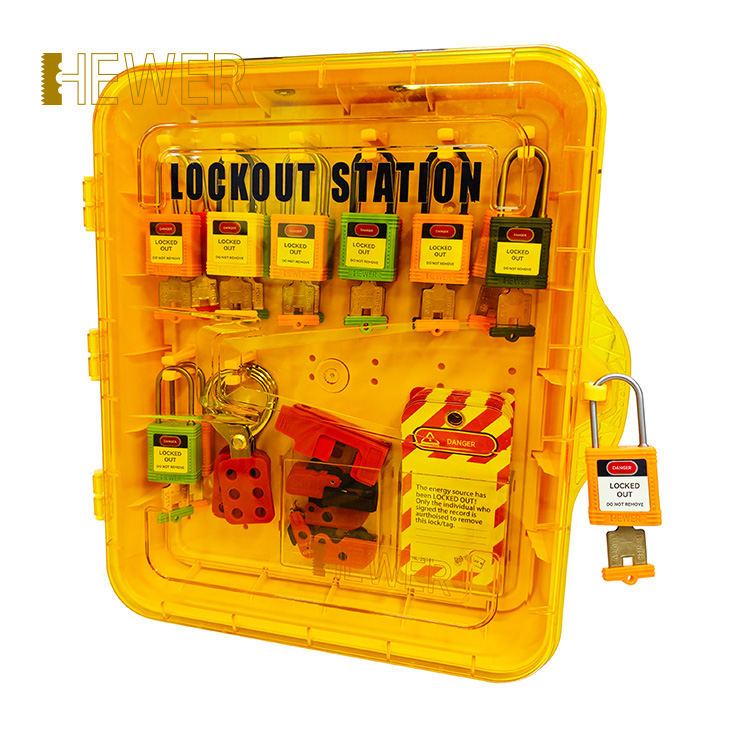
HEWER MultiLOTO Lockout stations serve as a centralized,
highly visible hub for Lockout Tagout (LOTO) equipment, which is critical for
maintaining workplace safety during machinery maintenance or repair. By
organizing essential safety devices in one location, these stations ensure that
employees can quickly access the tools needed to neutralize energy sources and
prevent accidental startups.
Core Applications and Benefits
Centralized Resource Management: HEWER MultiLOTO Lockout stations store a variety of LOTO devices, such as padlocks, tags, hasps, and circuit breaker lockouts, in a fixed location to ensure they are always available when needed.
Compliance and Visibility: Keeping equipment in a HEWER MultiLOTO Lockout station helps facilities comply with safety regulations by demonstrating a structured hazard mitigation protocol.
Improved Accountability: The organized
layout allows safety managers to see immediately if equipment is missing or in
use, which is vital for monitoring ongoing maintenance projects.
Reduced Downtime: By eliminating the time
spent searching for misplaced safety gear, HEWER MultiLOTO lockout stations streamline
the lockout process, allowing for more efficient transitions between operation
and maintenance.
Strategic Placement in Industrial Settings
Near Energy Isolation Points: Lockout
stations are often placed near primary electrical panels or valve clusters to
minimize the distance workers must travel with equipment.
High-Traffic Maintenance Areas: Locating lockout
stations in central workshops or tool rooms ensures that all personnel involved
in equipment repair have immediate access to standardized safety tools.
Hazardous Zones: In sectors like oil and
gas or heavy manufacturing, lockout stations are positioned strategically to
support specific safety management systems and arc flash protection protocols.
Integration with Safety Training
Lockout stations often feature clear
labeling or "shadow board" designs, which serve as a visual aid for
training scenarios. They reinforce proper hazard identification and ensure that
workers select the correct tool for the specific energy source being isolated.